Problem impact canvas
A structured canvas for slowing down solutionism and creating shared understanding before teams commit to action.
Use it when
- A team is moving too quickly from problem to solution.
- A complex challenge needs to be made visible before decisions are made.
- Stakeholders need a shared way to understand impact, not just activity.
- Existing goals, roadmaps or OKRs lack enough problem context.
Helps with
- Clarifying what is actually happening
- Understanding who is affected
- Connecting problems to outcomes
- Slowing premature solutioneering
What you get
- A clearer problem frame
- A shared view of impact
- Two or three outcomes that describe meaningful improvement
- A short driver statement that explains why action is needed
What you need
- A messy or poorly framed challenge
- People or groups affected by the problem
- Evidence, observations or assumptions about the current reality
- A willingness to pause before choosing solutions
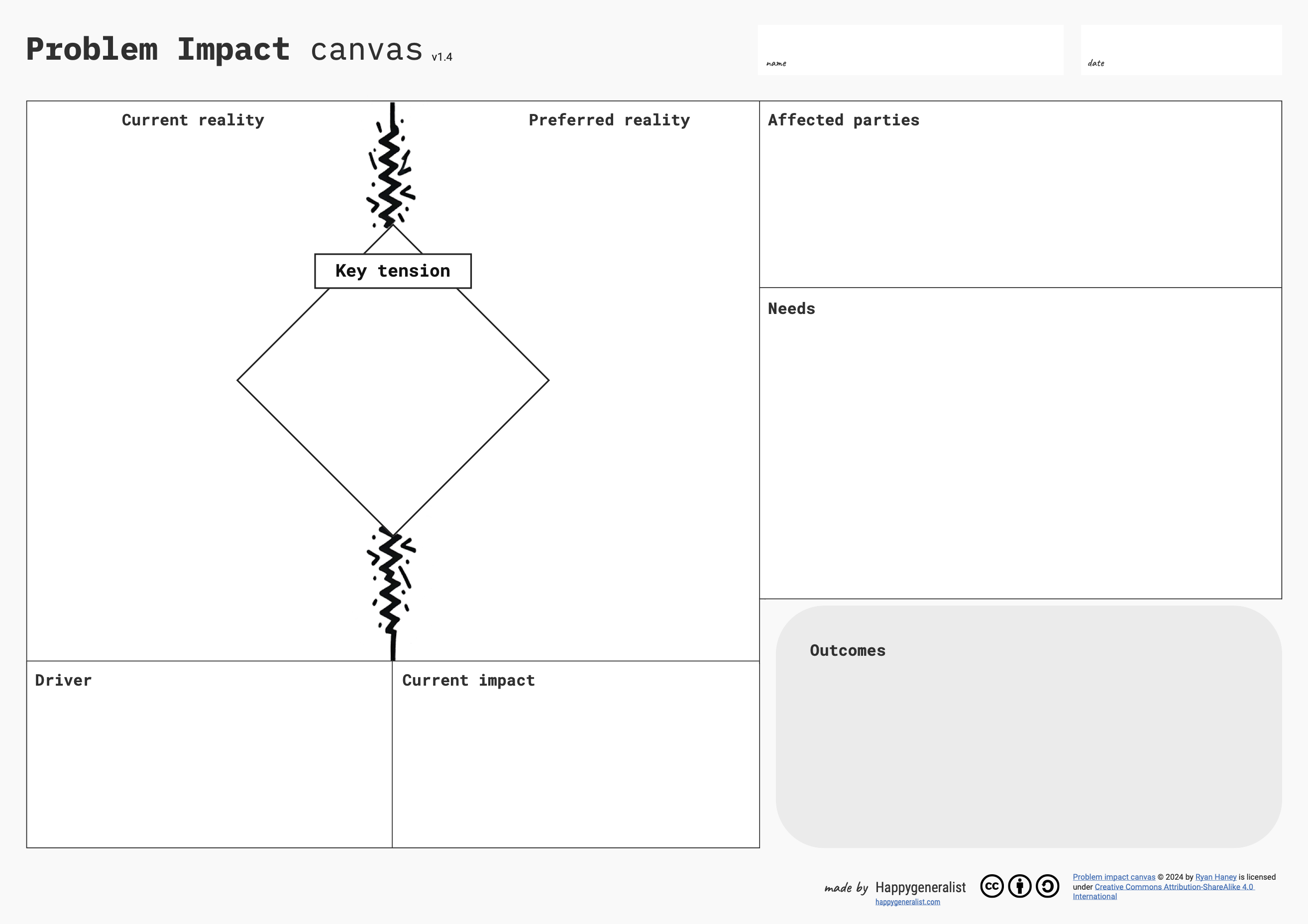
The Problem Impact Canvas helps people clarify what is happening now, who is affected, why the situation matters, what needs to change and what outcomes would show meaningful improvement.
It is designed for the moment before delivery language takes over: before the roadmap, before the solution, before the metric becomes the point. It gives teams a shared frame for understanding the problem they are actually trying to address.
What it is
The canvas is a structured framing tool for messy, multi-stakeholder problems.
It guides people through a sequence of prompts that surface the current reality, identify affected parties, name the main tension, describe a preferred reality and define the needs and outcomes that matter.
The result is a clear, shareable artefact that can be used to align stakeholders, guide experimentation or inform strategy.
Why it exists
Many teams do not fail because they lack ideas.
They fail because they act before they have a shared understanding of the problem.
Goals can be vague. Roadmaps can become solution-led. OKRs can appear measurable while still being disconnected from the reality people experience. The Problem Impact Canvas slows that movement down and creates a safer foundation for action.
How it works
The canvas asks teams to work through eight connected areas:
- Affected parties — who the problem touches.
- Current reality — what is happening now.
- Current impact — why the current situation matters.
- Main tension — the central conflict or gap.
- Preferred reality — what should be true instead.
- Key needs — what must be available, clear, reliable, safe or possible.
- Outcomes — what meaningful improvement would look like.
- Driver statement — a short summary of the challenge and why action is needed.
What makes it different
The canvas does not assume the problem is already understood.
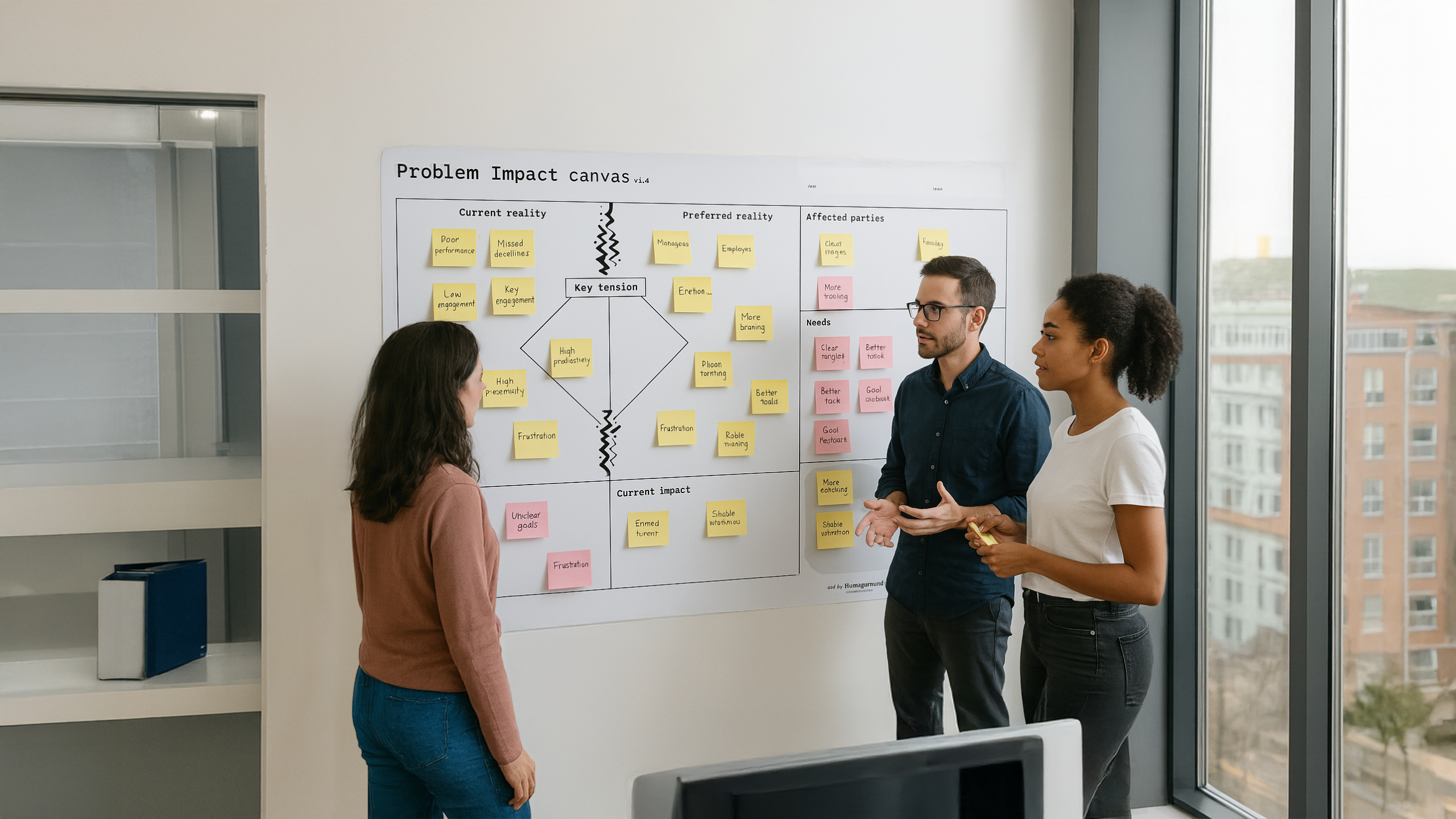
It separates reality, impact, needs and outcomes so that teams can see where they are making assumptions. This makes it useful for early discovery, policy work, service design, organisational change and any situation where different people hold different versions of the problem.
Public method note
This tool is part of a wider Happygeneralist method system. This page intentionally exposes only the user-facing layer needed to understand and start using the canvas.
The deeper method anatomy, adaptation logic and facilitation judgement are held privately so the tool can keep developing without turning every page into a full methods manual.